
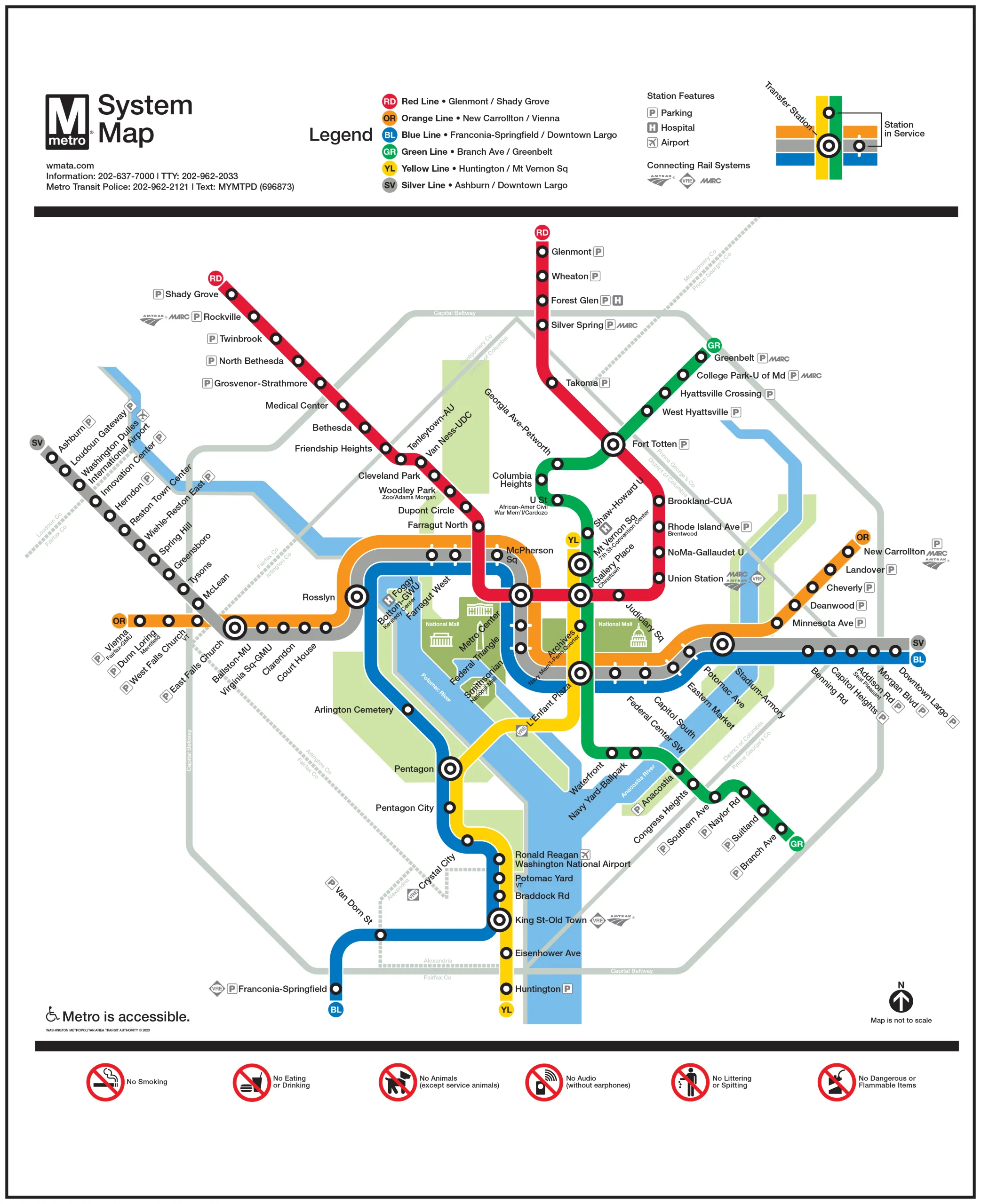
DC Metro Map – Wmata metro map > dc metro red line map | Washington metro map pdf
Whether you are a long-time Washington D.C. resident, a first-time tourist, or a business traveler visiting the U.S. capital, the Washington DC Metro Rail system (WMATA) remains the most reliable and efficient way to move around the city.
This DC Metro Map 2026 guide has been carefully updated to provide the latest Washington Metro Rail map, including all metro lines, station extensions, routes, and service updates. In this complete guide, you’ll find everything you need to understand the Washington DC Metro system, plan faster routes, and download a printable DC Metro Map PDF for offline use.
From daily commuting to sightseeing across downtown D.C., this guide helps you navigate the WMATA Metro map with clarity and confidence.
Whether you’re searching for a Washington DC Metro Rail map PDF, a DC Metro system map 2026, or a printable Washington Metro map, this resource covers it all. Get ready to commute smarter, avoid confusion, and explore Washington D.C. efficiently using one of the most important public transportation networks in the United States.
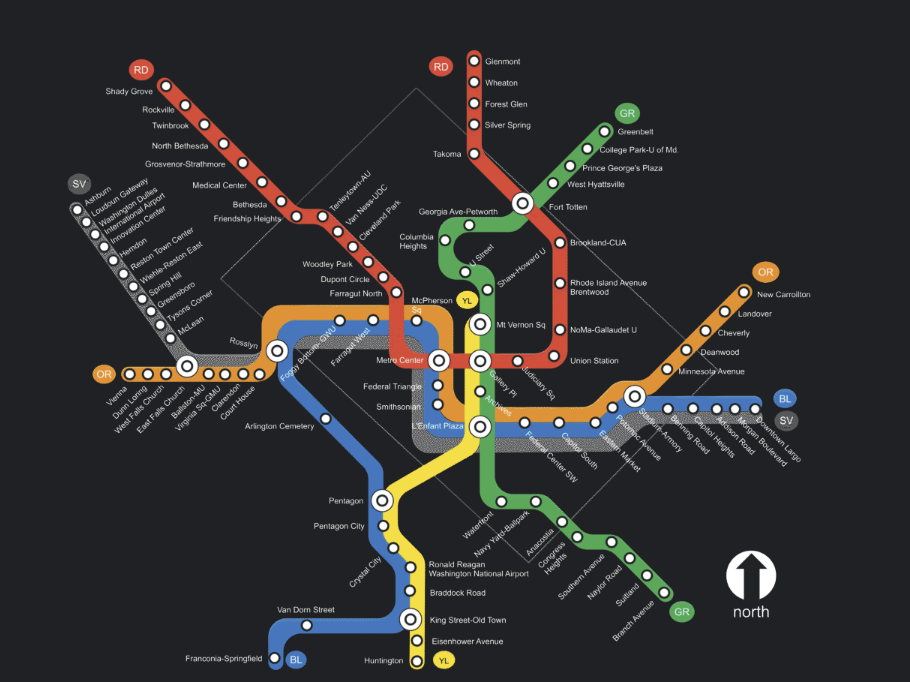
Live DC Metro Map
Want to see the Washington DC Metro system in real time? View the live DC Metro map to track train movements, service status, and station updates instantly.
View Live DC Metro MapWatch Video DC Metro Map 2026 – A Complete Simple Guide
Overview of WMATA and Its Significance in Washington DC
The Washington Metropolitan Area Transit Authority (WMATA), established in 1976, is the backbone of public transportation in the Washington, DC metropolitan region. Serving millions of residents, commuters, tourists, and government professionals every year, the WMATA Metro system provides a fast, reliable, and efficient way to travel throughout the nation’s capital.
The Washington DC Metro Rail system operates across six color-coded lines and more than 90 metro stations, seamlessly connecting Washington DC, Maryland, and Virginia. This extensive network makes daily commuting easier while supporting tourism, business travel, and regional economic growth.
WMATA plays a critical role in reducing road congestion, supporting sustainable transportation, and providing dependable access to key locations such as downtown DC, government buildings, airports, universities, and major residential areas. Whether traveling for work or leisure, the DC Metro system remains one of the most important public transit networks in the United States.
Established
Founded in 1976 to serve the Washington DC metropolitan area.Metro Lines
Six major rail lines connecting DC, Maryland, and Virginia.Stations
Over 90 Metro Rail stations across the region.Regional Importance
Essential for daily commuting, tourism, and business travel.Map of Washington DC metro
Understanding the DC Metro Map
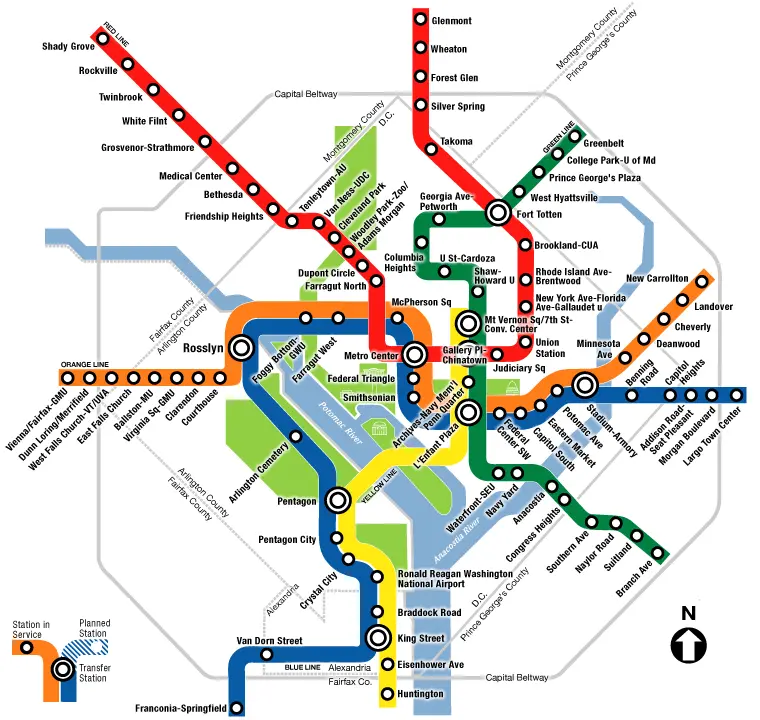
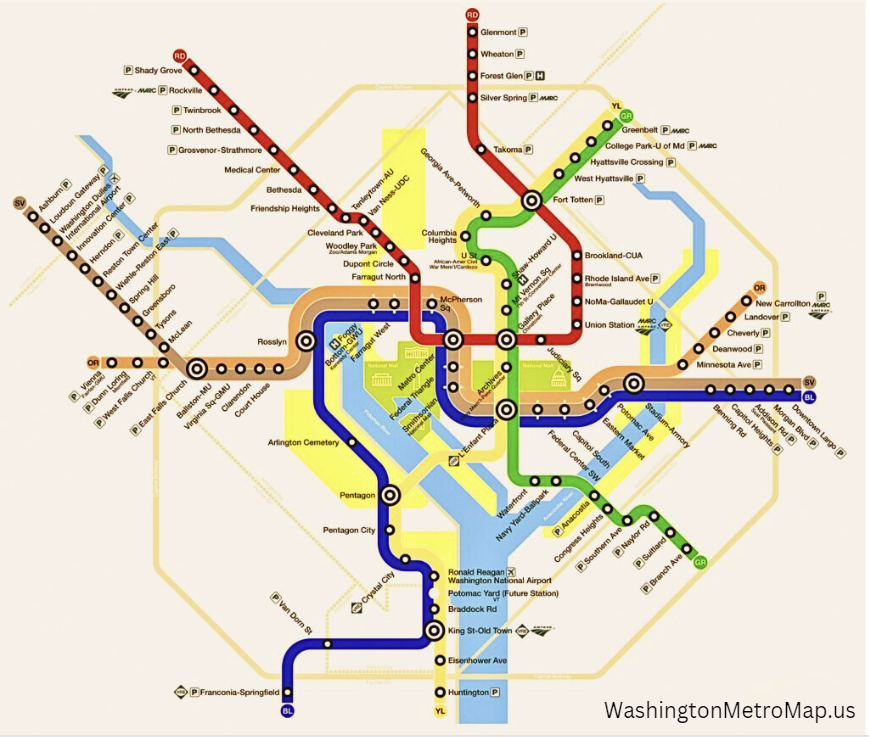
The Washington DC Metro map is designed to help riders easily understand routes, stations, and connections across the city and surrounding suburbs. Once you understand how the lines, transfer stations, and transit connections work, navigating the WMATA Metro system becomes simple and efficient.
Metro Lines
The DC Metro Rail system consists of six color-coded lines. Each line serves different parts of Washington DC, Maryland, and Virginia. In the city center, many lines share tracks, then branch out toward suburban areas.
Note: The Purple Line is currently under construction and is expected to open in 2027. Although it is not part of the WMATA system, it will play an important role in Maryland’s transit network. Because it is not operated by WMATA, it does not appear on the official DC Metro map.
Transfer Stations
Transfer stations allow passengers to switch between Metro lines. On the WMATA Metro map, these stations are shown with larger, concentric circles to make them easy to identify.
- Metro Center: Red, Blue, Orange, and Silver Lines
- Gallery Place: Red, Yellow, and Green Lines
- L’Enfant Plaza: Blue, Orange, Silver, Yellow, and Green Lines
Other Train Lines: Amtrak, MARC, and VRE
The DC Metro map also highlights connections to major regional and long-distance rail services.
- Amtrak: Provides long-distance travel across the United States. Key stops include Union Station (DC), New Carrollton (MD), and King Street (VA).
- MARC: Maryland’s commuter rail, ideal for trips to Baltimore or BWI Airport. Weekend service is limited.
- VRE: Virginia Railway Express, operating mainly on weekdays for commuters traveling to and from Washington DC.
Bus Lines
The WMATA bus system works alongside the Metro to provide wider coverage throughout the region. Multiple transit agencies operate bus services that connect neighborhoods not directly served by rail.
- Metrobus – Operated by WMATA
- DC Circulator – Operated by DDOT
- ART – Arlington Transit
- DASH – Alexandria Transit
- RideOn – Montgomery County
- TheBus – Prince George’s County
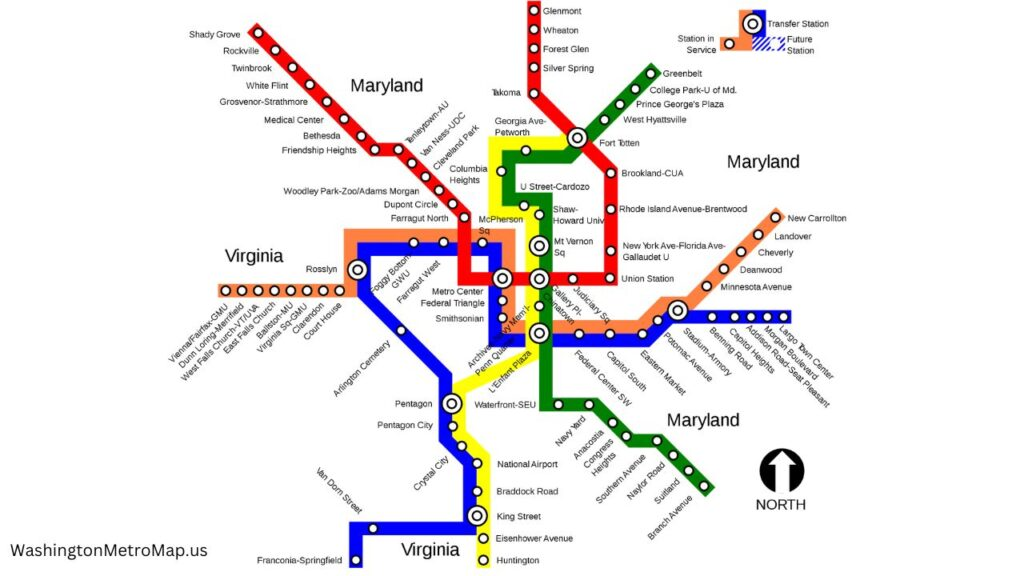
Detailed Map Breakdown
Line-by-Line Analysis
🔴 Red Line
- Connects suburban Maryland directly to the heart of Washington DC.
- New station added: North Bethesda, expanding residential access.
🔵 Blue Line
- Extended to Potomac Yard, a fast-growing residential and commercial hub.
- Improved service frequency with reduced wait times.
🟠 Orange Line
- Enhanced connectivity to major transfer stations.
- Smoother commutes through better line coordination.
⚪ Silver Line
- Direct extension to Dulles International Airport.
- New stations include Reston Town Center and Innovation Center.
🟢 Green Line
- Upgraded stations with modern amenities.
- Improved accessibility and higher peak-hour frequency.
🟡 Yellow Line
- Extension planned to Fort Belvoir.
- Better transfer connections with Blue and Silver lines.
Major Stations & Transfer Points
- Union Station: Central hub connecting Amtrak, MARC, VRE, and Metro services.
- Metro Center: Primary transfer station for Red, Orange, Blue, and Silver lines.
- L’Enfant Plaza: One of the busiest hubs, connecting five Metro lines.
Accessibility Features
The DC Metro Map 2026 highlights WMATA’s strong commitment to accessibility, ensuring that the Washington DC Metro system is usable, safe, and convenient for passengers of all abilities.
Elevators & Ramps
Elevators and ramps are available at all new and existing Metro stations, making travel easier for wheelchair users and passengers with mobility challenges.Audio Announcements
Clear audio announcements provide real-time station and service information for visually impaired riders.Visual Displays
Digital screens and visual alerts assist hearing-impaired passengers with station names, route changes, and service updates.Improved Signage
Enhanced signage throughout stations helps passengers navigate platforms, exits, and transfers more easily.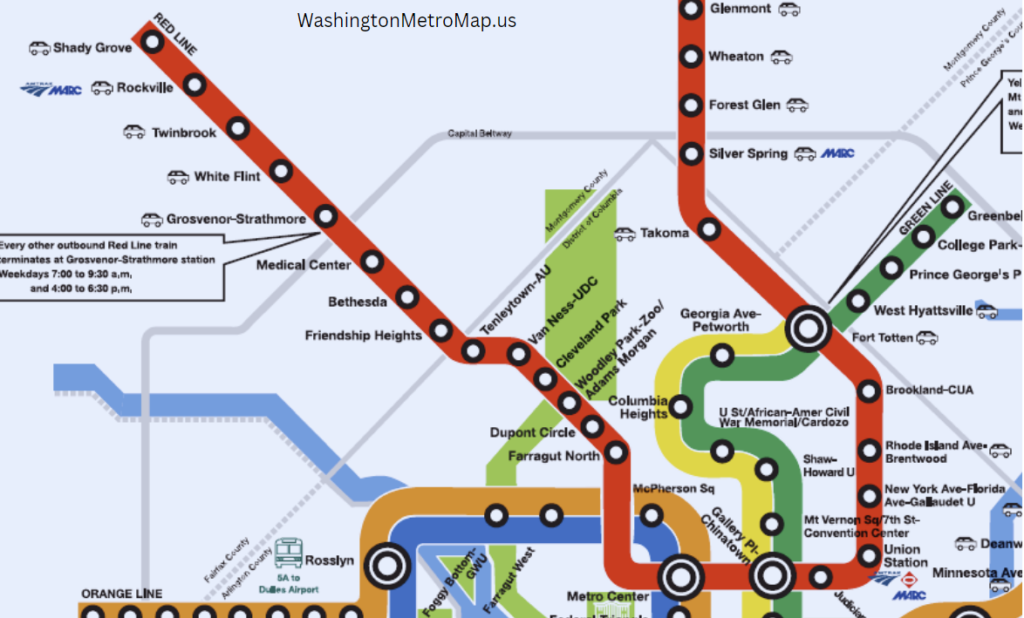
Future Developments: Upcoming Projects & Expected Changes Beyond 2026
The Washington DC Metro system (WMATA) continues to evolve beyond 2026 with long-term projects aimed at improving reliability, accessibility, capacity, and sustainability. These future developments reflect WMATA’s commitment to serving a growing metropolitan population while modernizing one of the nation’s most important transit networks.
Metro Line Extensions & New Connections
WMATA and regional partners are evaluating potential Metro extensions to better serve expanding suburban communities. These projects focus on reducing congestion, improving regional connectivity, and supporting long-term urban development.Purple Line Integration (Maryland)
Although not operated by WMATA, the Purple Line is expected to open after 2026 and significantly improve east–west travel in Maryland. Future Metro maps may reflect improved transfer connections with existing WMATA stations.Next-Generation Trains
WMATA plans to expand the use of modern railcars featuring improved safety systems, better energy efficiency, quieter rides, and enhanced accessibility for passengers with disabilities.Station Modernization Programs
Older stations will continue to receive upgrades including improved lighting, clearer signage, platform rehabilitation, and enhanced elevator and escalator reliability.Smart Technology & Real-Time Data
Future Metro improvements include smarter signaling systems, more accurate real-time arrival information, and expanded use of mobile apps for trip planning and service alerts.Sustainability & Green Transit
WMATA is working toward long-term environmental goals by reducing emissions, increasing energy efficiency, and integrating more sustainable infrastructure across the Metro system.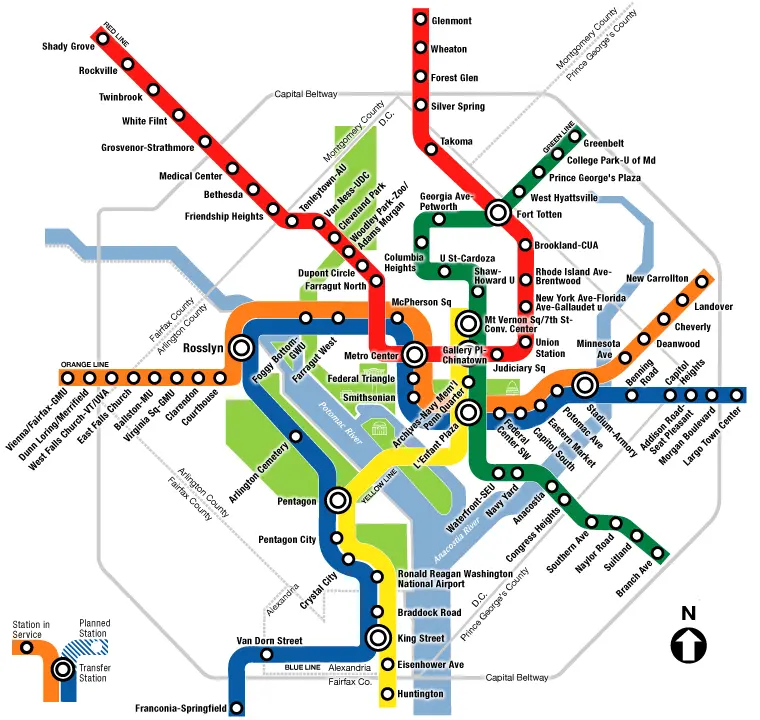
Conclusion
DC Metro Map 2026 – Update Overview
The WMATA Metro map 2026 update represents a major enhancement for the Washington DC Metro system. With new stations, extended routes, and improved accessibility, the updated map ensures a more convenient and efficient transit experience for both residents and visitors.
New Stations
Additional stations have been added to extend coverage to emerging residential and commercial areas.Extended Routes
Metro lines have been expanded to improve connectivity and reduce commute times across the region.Enhanced Accessibility
All stations now feature better elevators, ramps, visual and audio guidance for easier navigation.Seamless Transfers
Improved station layouts and signage make it easier to transfer between multiple lines.Whether you’re a daily commuter or a tourist, the DC Metro Map 2026 helps you navigate the capital city with ease and explore new destinations.
By incorporating these elements, this article aims to provide a comprehensive, user-friendly guide to the WMATA Metro map for a wide audience.